César Manrique's Lanzarote
Art, Architecture and Nature

There are very few places where one person has had such a profound influence on the identity of an entire island.
Visit Lanzarote and you will quickly notice something unusual. The whitewashed buildings, the volcanic landscape, the absence of high-rise developments, the way roads and buildings appear to follow rather than dominate the terrain, and the extraordinary places where art and nature seem to become one.
Much of this is part of the legacy of César Manrique.
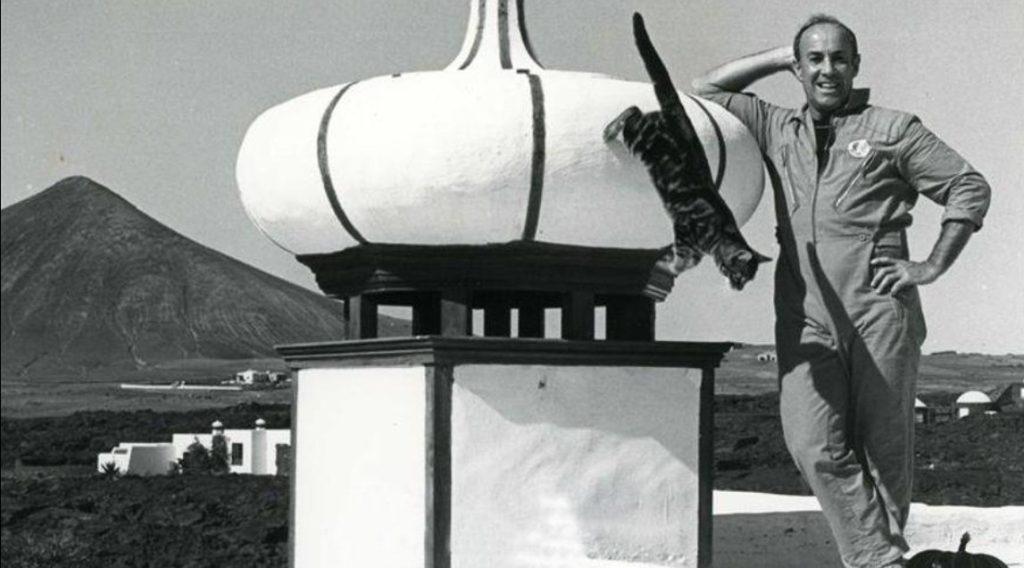
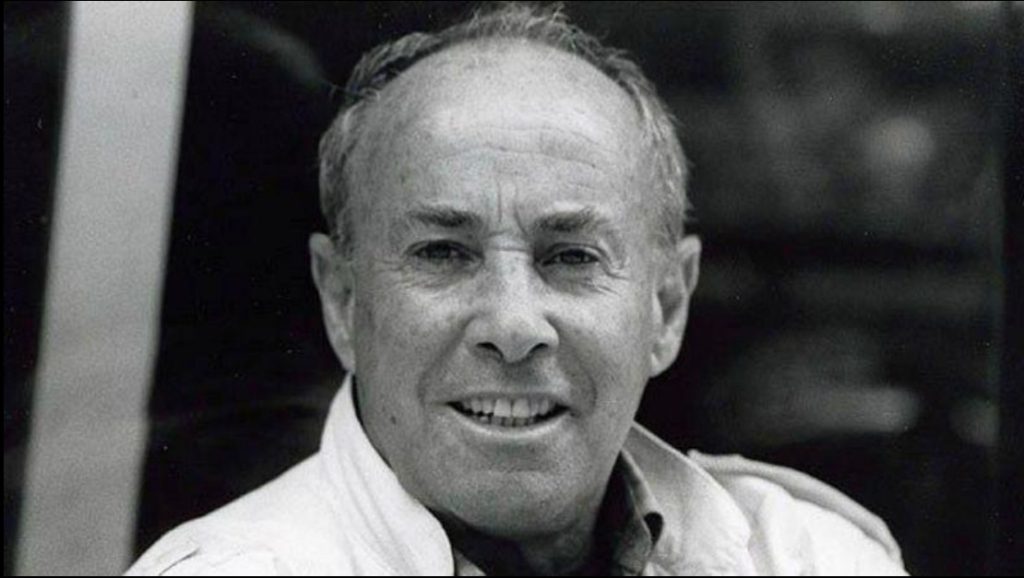
Born in Arrecife in 1919, Manrique was an artist, architect, sculptor and passionate environmentalist who became one of Lanzarote's most influential figures. After spending many years studying and working in Madrid and later New York, he returned permanently to Lanzarote in 1968.
His influence on the island went far beyond individual buildings. Manrique believed that Lanzarote's extraordinary volcanic landscape was something to be protected and celebrated, not covered over in the name of tourism.
And that philosophy can still be seen almost everywhere you go.
To discover more about his life, work and legacy, visit the official Fundacion Cesar Manrique website
A different vision for Lanzarote
When tourism began to grow rapidly in the Canary Islands, Lanzarote faced a choice.
It could follow the path of large-scale development and high-rise resorts seen elsewhere, or it could try to preserve the character that made the island unique.
Manrique became one of the strongest voices arguing for the latter.
His approach was simple but revolutionary: work with the landscape rather than against it.
Instead of placing architecture in opposition to nature, he integrated buildings into volcanic caves, lava fields, cliffs and gardens. He used natural materials and traditional Lanzarote architecture alongside modern design, creating spaces that feel as though they belong to the island.
The island's network of Centres of Art, Culture and Tourism grew from this vision, combining art, architecture, geology and the natural environment.
This is why visiting Manrique's work is about much more than seeing a collection of buildings. It is a way of understanding Lanzarote itself.
Discover Lanzarote through the eyes of César Manrique
You can't really explore Lanzarote without encountering the work of César Manrique.
There are seven principal Centres of Art, Culture and Tourism associated with this vision: Cueva de los Verdes, Jameos del Agua, Casa-Museo del Campesino, El Diablo at Timanfaya, Mirador del Río, MIAC-Castillo de San José and Jardín de Cactus.
Each one is completely different, but together they demonstrate the same idea – that art and nature can co-exist.
Jameos del Agua – discover a world beneath the volcano
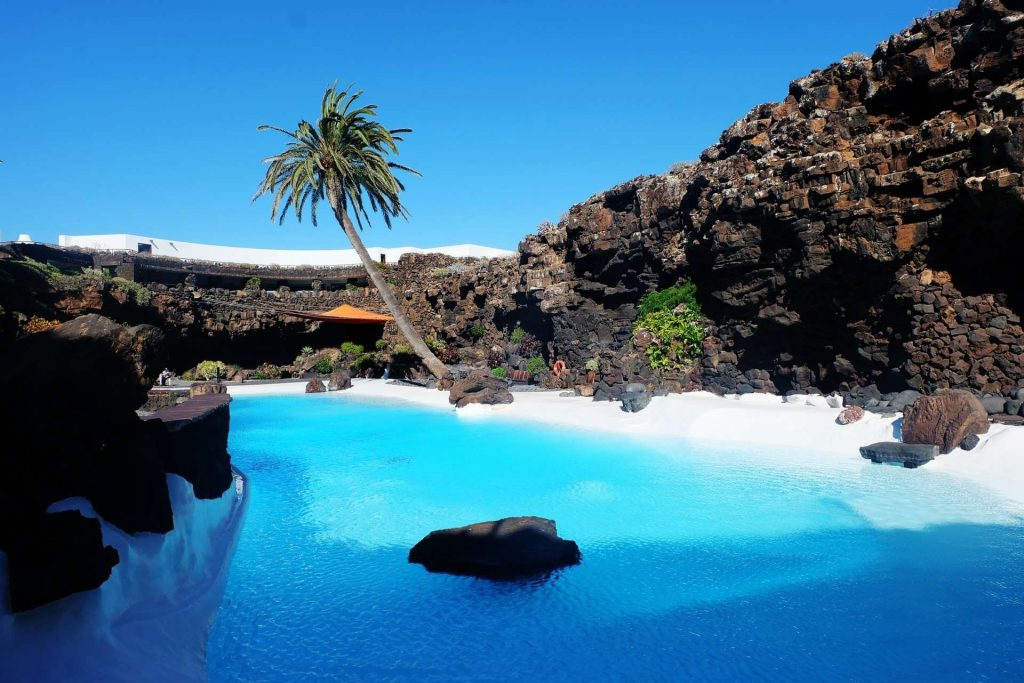
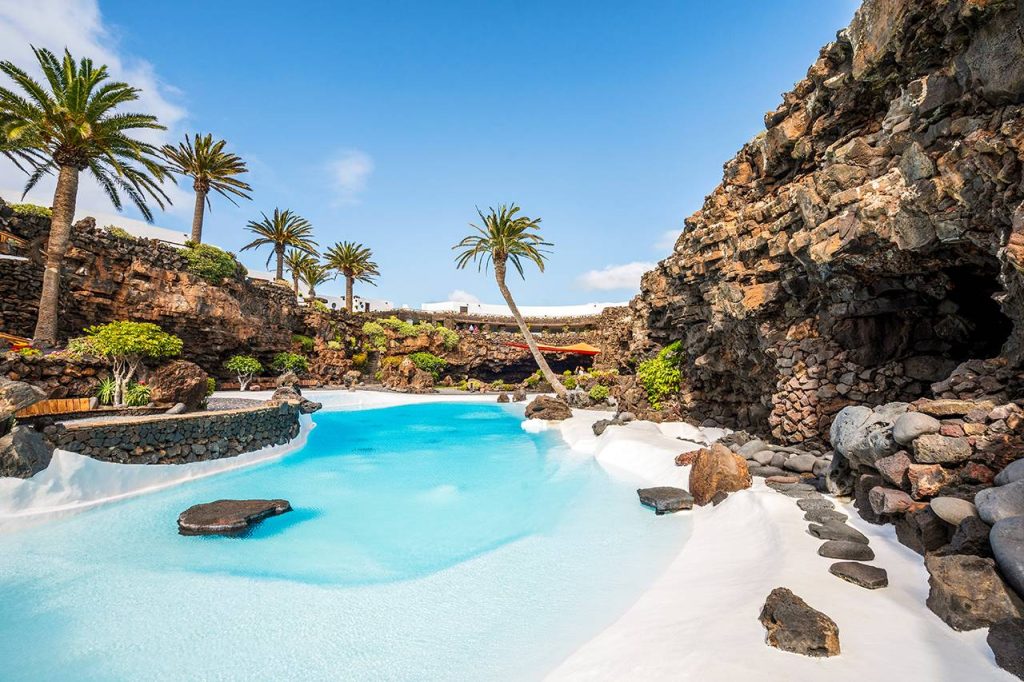
One of Lanzarote's most spectacular attractions, Jameos del Agua is part of an enormous volcanic tunnel created by the eruption of La Corona volcano.
Manrique transformed the natural volcanic space into something extraordinary while retaining the character of the original landscape. The result is one of Lanzarote's most recognisable places.
There is even a small natural lake beneath the volcanic rock where the tiny blind albino crab, unique to this environment, can be found.
But perhaps the most remarkable thing about Jameos is the feeling that the architecture isn't really separate from the volcano at all.
It feels as though it has always belonged there.
Cueva de los Verdes – become volcanic explorers
Just a short distance from Jameos del Agua is Cueva de los Verdes, another section of the same enormous volcanic tube.
Here, the emphasis is more on the extraordinary geological formations created as the lava flowed towards the sea.
The visit takes you through a series of volcanic galleries and chambers, allowing you to see the layers, shapes and textures created by the ancient eruption.
Interestingly, while César Manrique was responsible for the overall vision behind the tourist centres, the artistic intervention within Cueva de los Verdes was carried out by his collaborator Jesús Soto, particularly through the use of lighting to reveal the volcanic formations.
It is another excellent example of how the island's natural landscape became the starting point rather than something to be hidden.
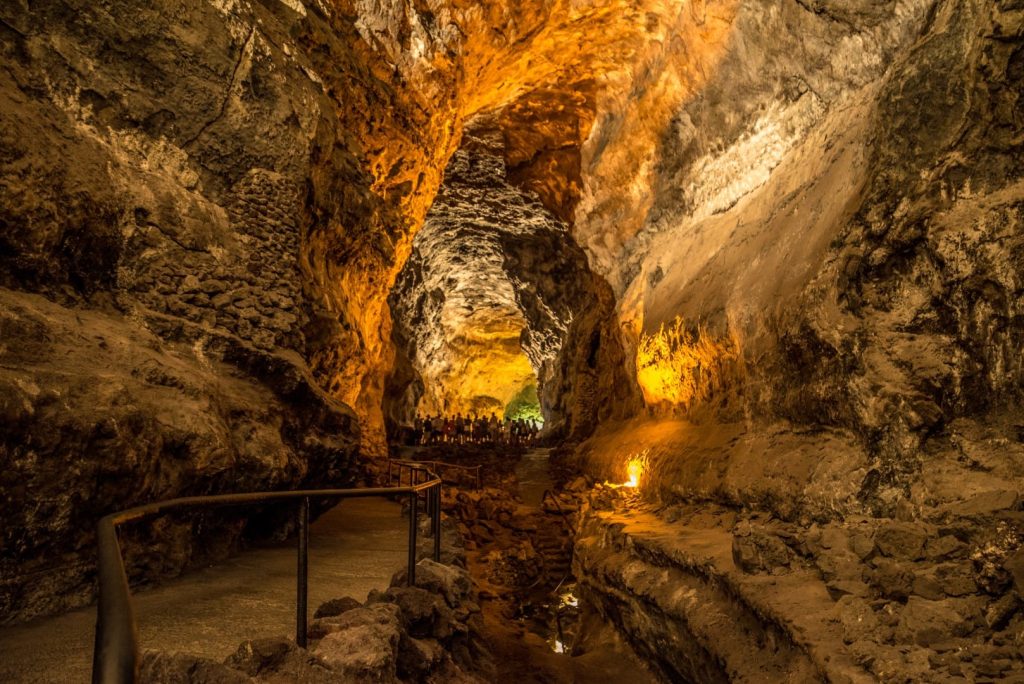
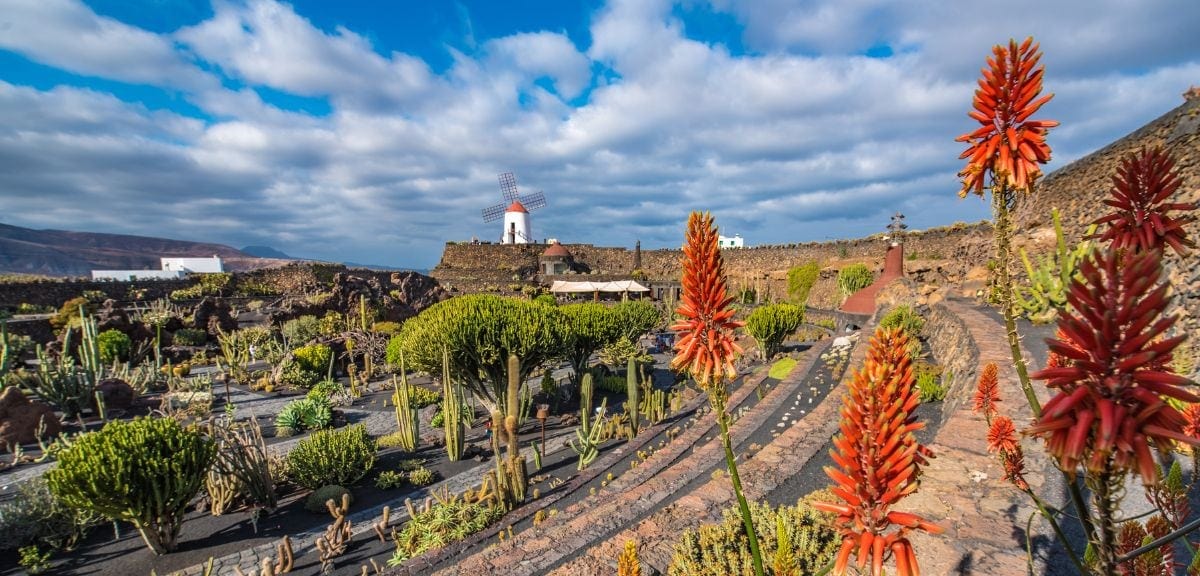
Jardín de Cactus – an extraordinary garden
At first glance, a cactus garden might not sound like one of Lanzarote's must-see attractions.
But Jardín de Cactus is quintessentially Manrique.
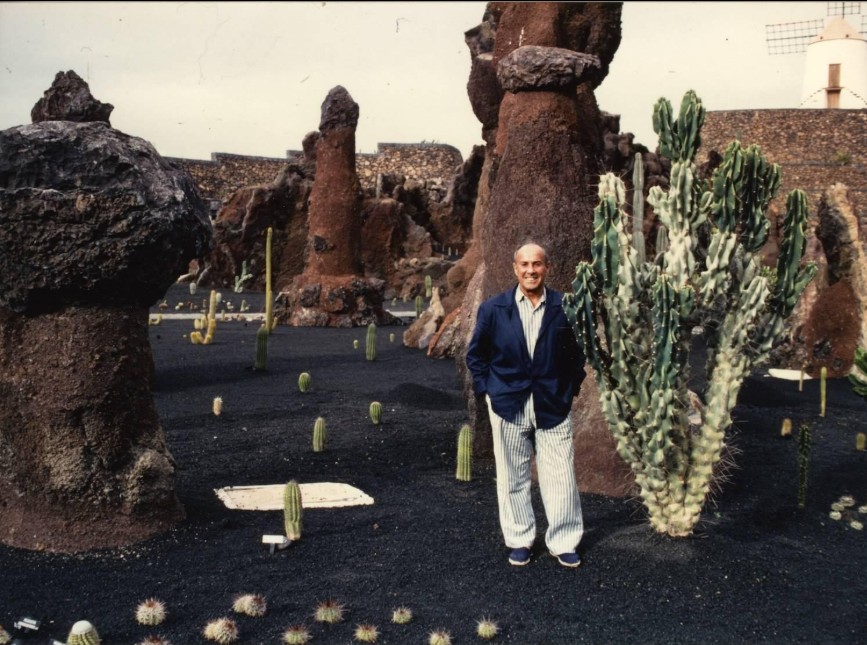
An old volcanic quarry was transformed into a spectacular amphitheatre-like garden, with thousands of cactus plants arranged across terraces that follow the shape of the original excavation.
The garden brings together cactus species from around the world while retaining the volcanic character of the site.
Look closely and you will also notice the traditional windmill rising above the garden – another reminder of how Manrique repeatedly combined Lanzarote's agricultural heritage with his contemporary vision.
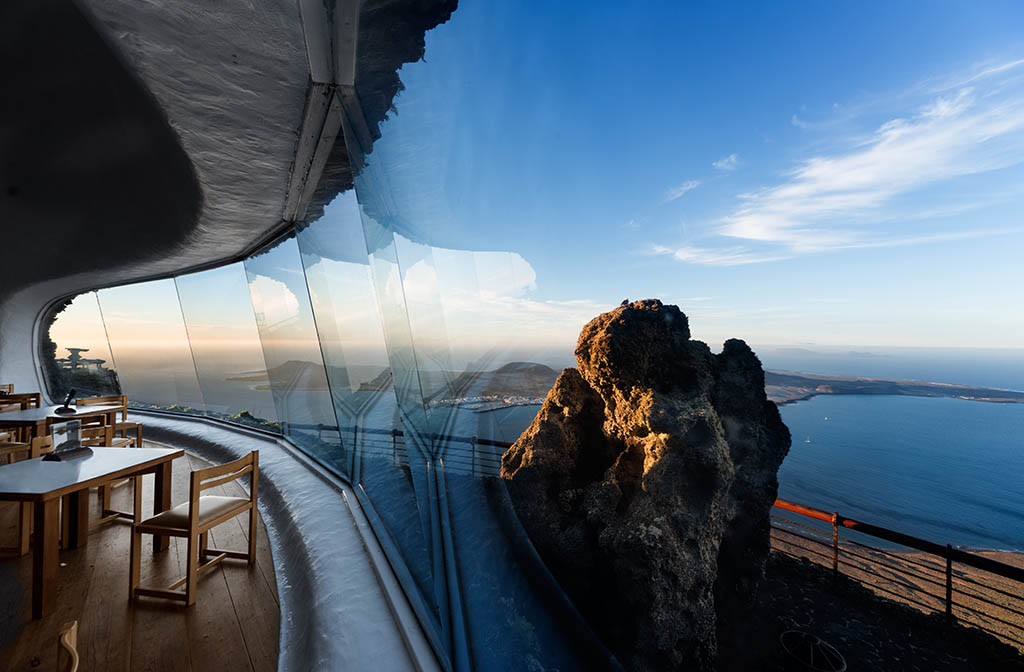
Mirador del Río – views across to La Graciosa
High on the Risco de Famara in the north of the island is Mirador del Río, one of Manrique's most spectacular architectural achievements.
From the outside, the building is remarkably discreet. It is built into the landscape and covered with volcanic stone, making it surprisingly difficult to see as you approach.
Inside, the architecture opens up towards the landscape, with huge curved windows framing the view across El Río towards La Graciosa and the Chinijo Archipelago.
It is a perfect example of Manrique's ability to make architecture guide the way we experience a landscape.
The building doesn't compete with the view.
It directs your attention towards it.
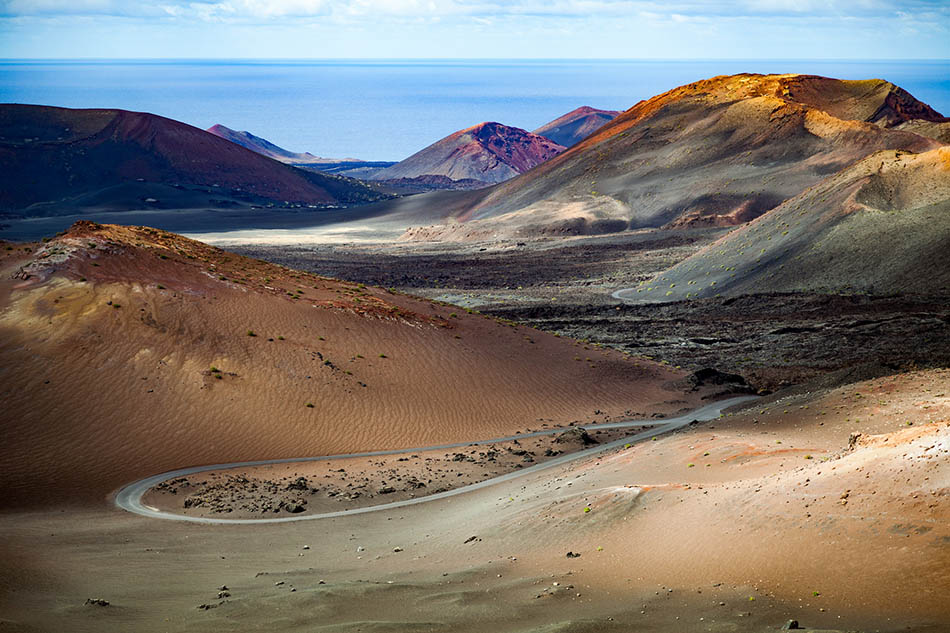
Timanfaya and El Diablo
Manrique's relationship with Lanzarote's volcanic landscape is perhaps most obvious at Timanfaya.
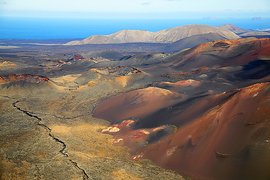
The Montañas del Fuego – Fire Mountains – are one of the most dramatic landscapes in the Canary Islands, created by the enormous eruptions that transformed Lanzarote in the 18th century.
Rather than building extensively across the volcanic terrain, Manrique's approach was to create a way for visitors to experience it while keeping the landscape itself as the main attraction.
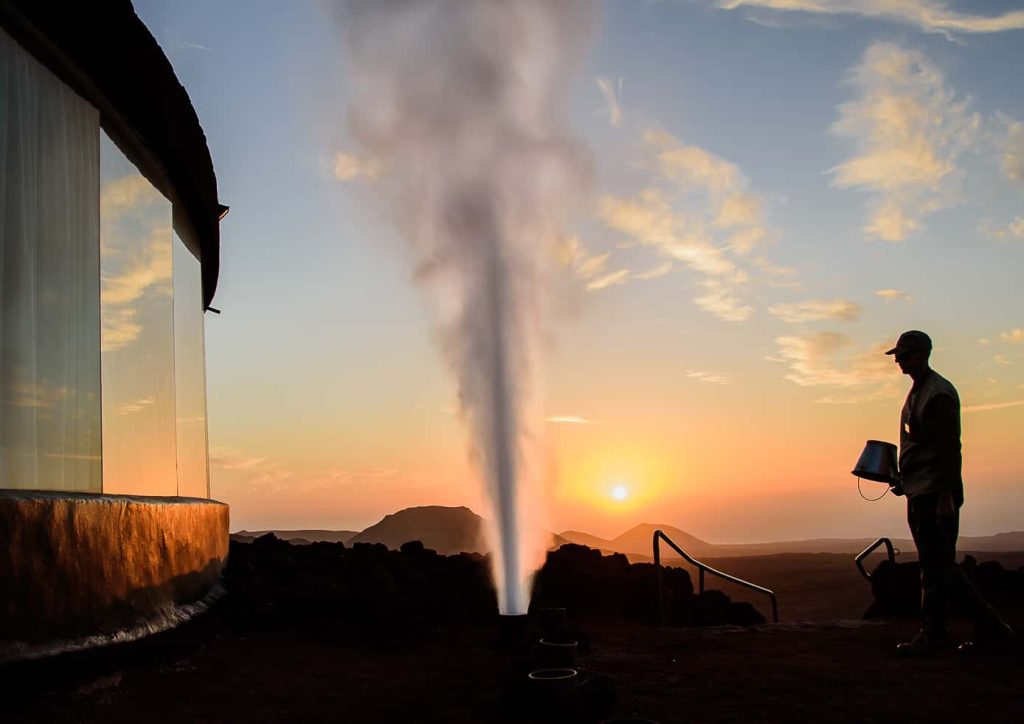
At the Islote de Hilario, the volcanic heat remains close beneath the surface, providing a remarkable demonstration of the island's geological character.
The restaurant El Diablo, designed by Manrique, takes this idea even further, with its volcanic setting and cooking using geothermal heat.
Here, the volcano isn't simply something to look at.
It becomes part of the experience.
Monumento al Campesino – discover traditional Lanzarote
Not all of Manrique's work was about volcanoes and dramatic landscapes.
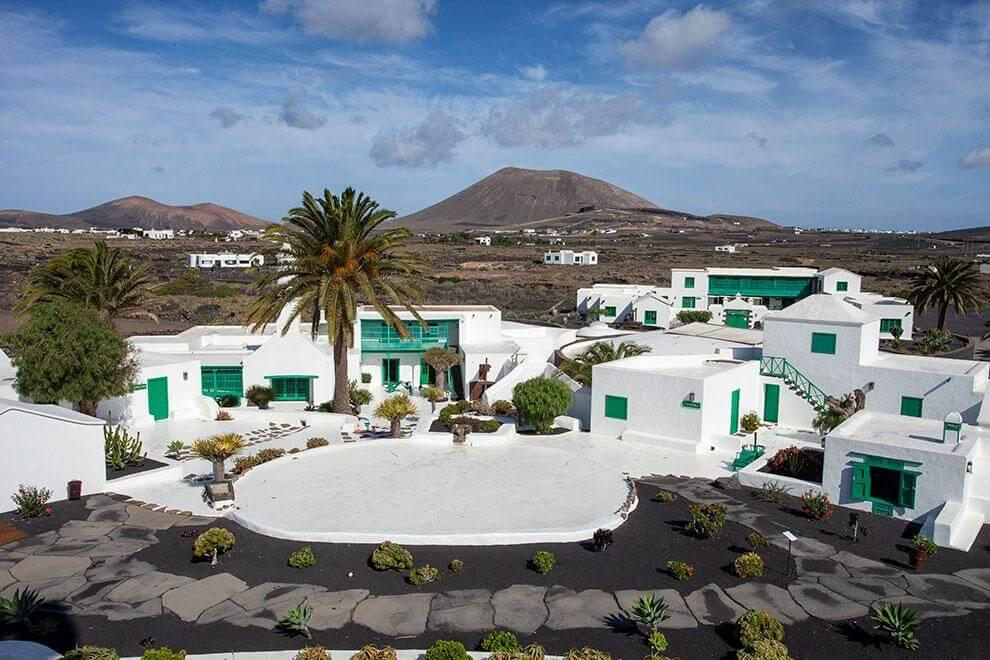
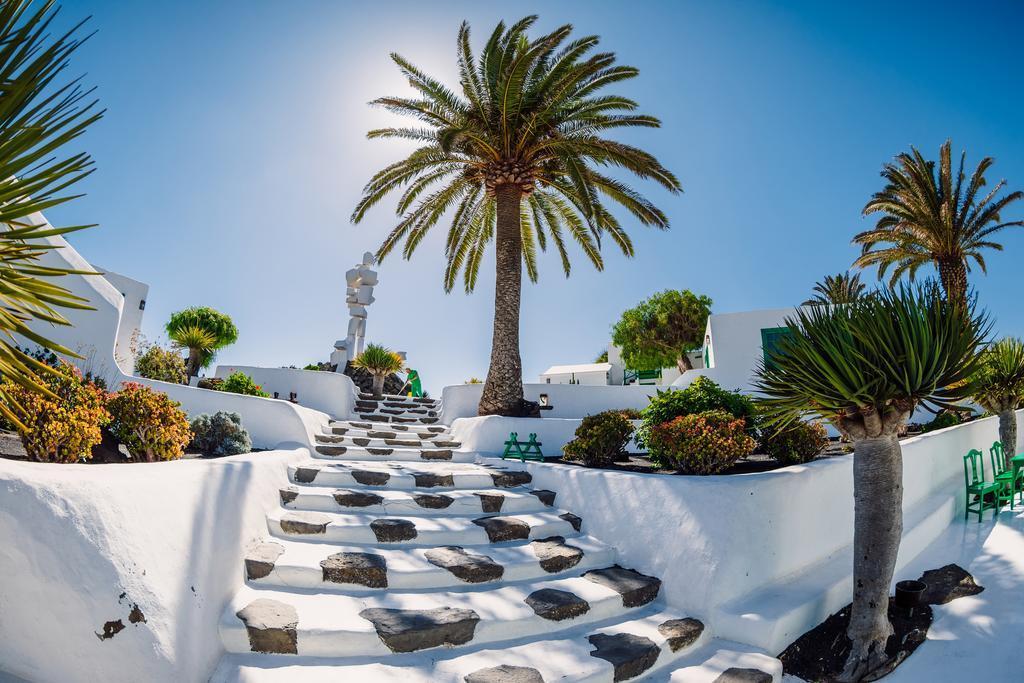
At Casa-Museo del Campesino, his focus turned towards Lanzarote's agricultural heritage and the people who learned how to live and farm on an island with very little rainfall, strong winds and volcanic soils.
The complex brings together traditional architectural elements including courtyards, cisterns, threshing floors and wine presses, creating a tribute to Lanzarote's farming traditions.
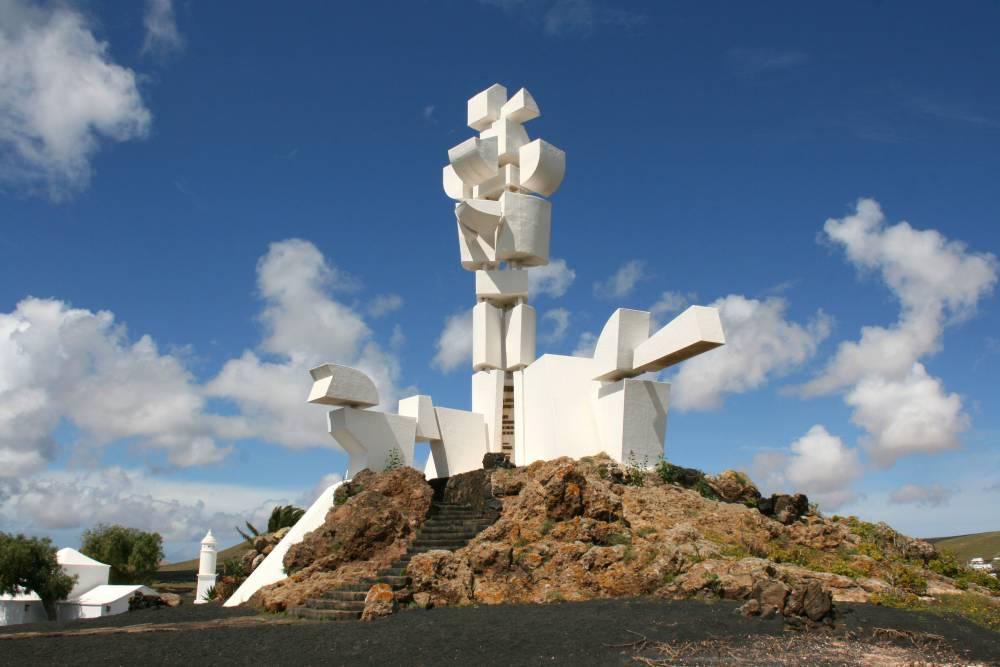
Look out for the enormous white sculpture Fecundidad, standing above the complex.
It is one of the most recognisable symbols of Manrique's work and his appreciation of the island's agricultural communities.
MIAC – Castillo de San José
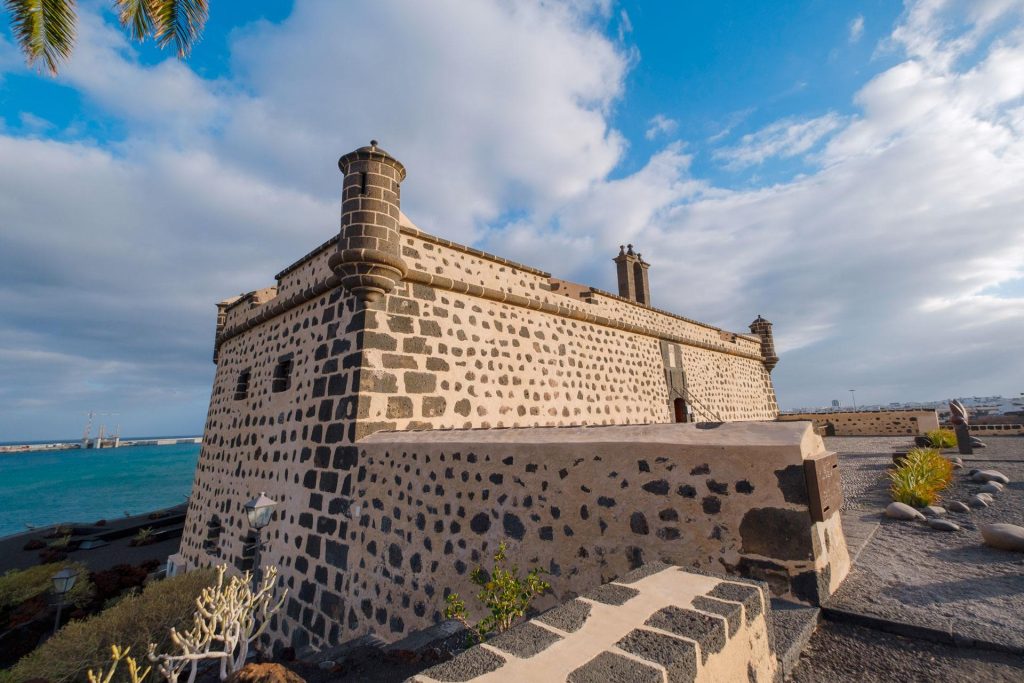
For something completely different, head to Arrecife and the Castillo de San José.
The historic 18th-century fortress was transformed into the Museo Internacional de Arte Contemporáneo (MIAC) in 1976.
Here, the volcanic landscape gives way to contemporary art inside a historic defensive building.
It is another example of Manrique's ability to give old spaces a new purpose while respecting their history.
Visit César Manrique's former homes
Perhaps the best way to understand Manrique himself is to visit the homes where he lived and worked.
There are two particularly fascinating places to visit: his former home in Tahíche and his final home in Haría.
His extraordinary home in Tahíche
Today, Manrique's former home in Tahíche is the Fundación César Manrique.
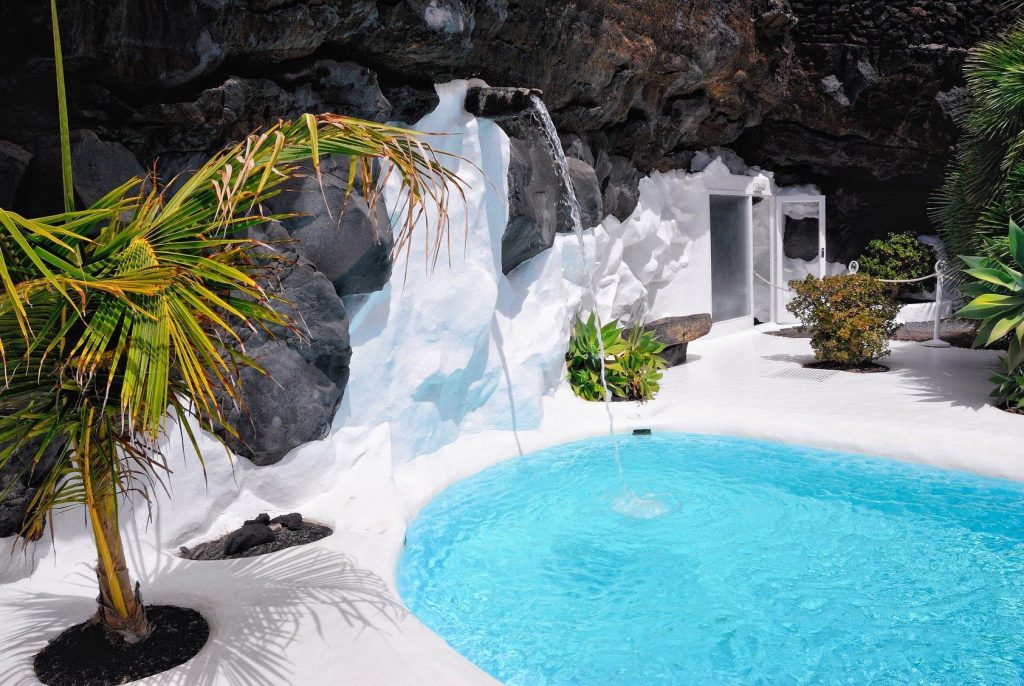
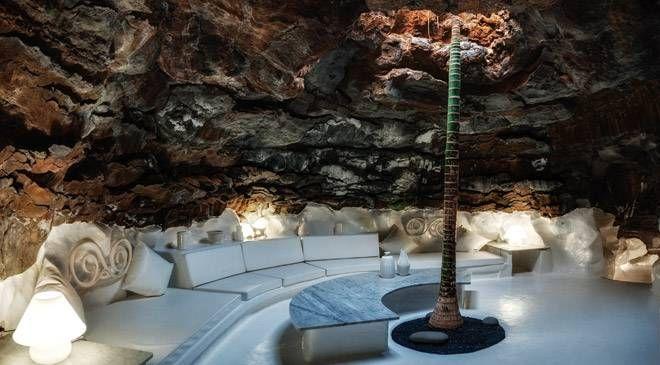
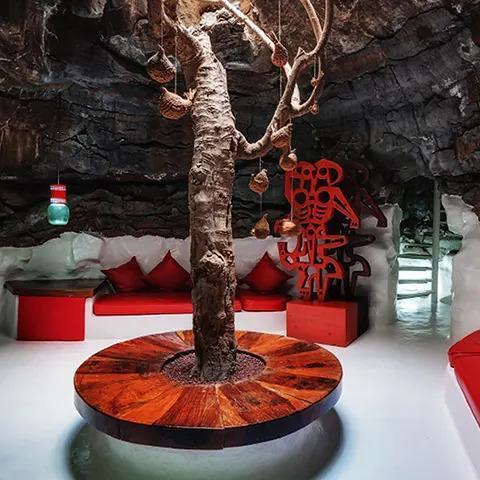
The house was designed by Manrique after his return from New York and built directly into a lava flow created by the eruptions of 1730–1736.
He lived there for 20 years, from 1968 until 1988.
The house is extraordinary.
Volcanic bubbles and lava cavities become rooms. Natural black rock contrasts with bright white walls. Large windows bring the landscape inside, while the architecture flows between underground volcanic spaces and the traditional forms of Lanzarote.
Rather than simply looking at Manrique's work, here you get an insight into how he actually lived.
It is perhaps the clearest expression of his belief that architecture should work in harmony with nature.
His final home in Haría
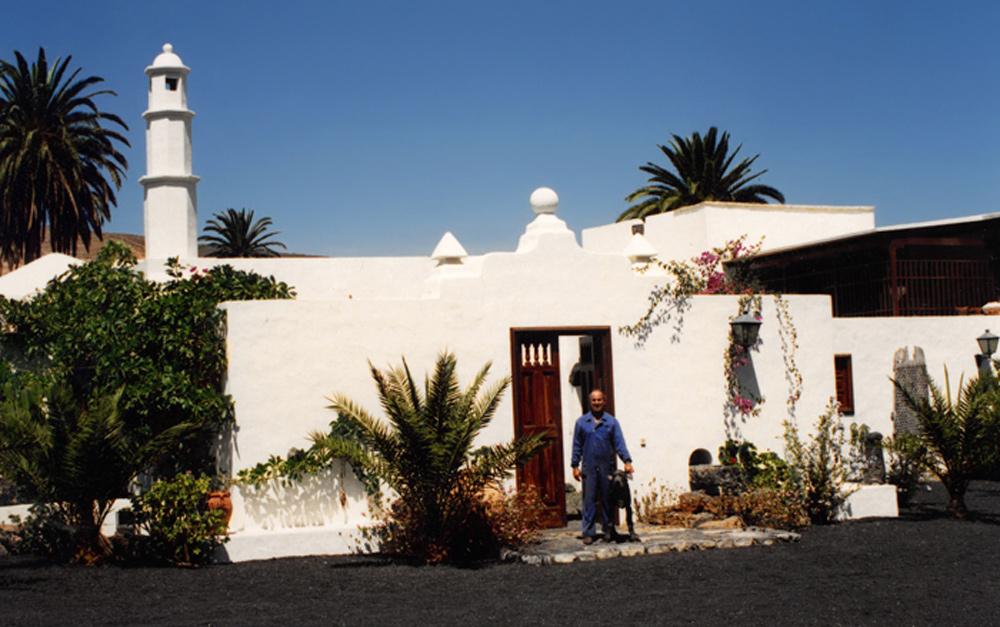
For another, much more personal glimpse into César Manrique's life, head north to Haría.
His final home, now known as the Casa-Museo César Manrique, is tucked into the beautiful Haría Valley, surrounded by palm trees and traditional whitewashed houses.
Manrique moved to Haría in 1988 and lived here until his death in 1992.
The house feels very different from his home in Tahíche.
Where Tahíche is dramatic, sculptural and deeply connected to Lanzarote's volcanic landscape, Haría is quieter and more intimate. The house incorporates traditional Lanzarote architecture alongside Manrique's own artistic touches.
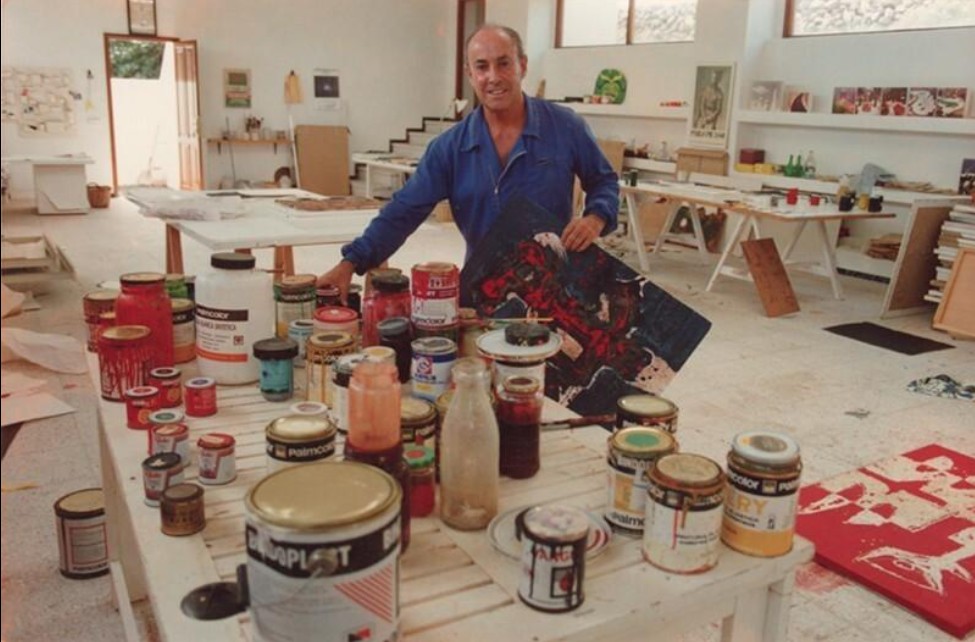
Inside, visitors can see his living spaces, studio, personal belongings and some of the objects and works that surrounded him during the final years of his life.
His studio is particularly interesting, offering an insight into Manrique not just as an architect but as an artist who continued to paint and create throughout his life.
The location is also part of the experience. The house looks out over the lush Haría Valley, one of the greenest and most beautiful parts of Lanzarote.
It is worth allowing time to explore Haría itself while you are there. Wander through the village, admire the traditional architecture and, if you are visiting on a Saturday morning, explore the local craft market.
Visiting both of Manrique's former homes gives you a fascinating contrast between two sides of his life:
Tahíche: his extraordinary relationship with volcanic landscapes, architecture and nature.
Haría: his quieter, more personal final chapter as an artist.
Together, they provide a much more complete picture of the man behind Lanzarote's artistic and architectural identity.
Look out for the Wind Toys
One of the most fun ways to discover Manrique's work around Lanzarote doesn't require buying a ticket at all.
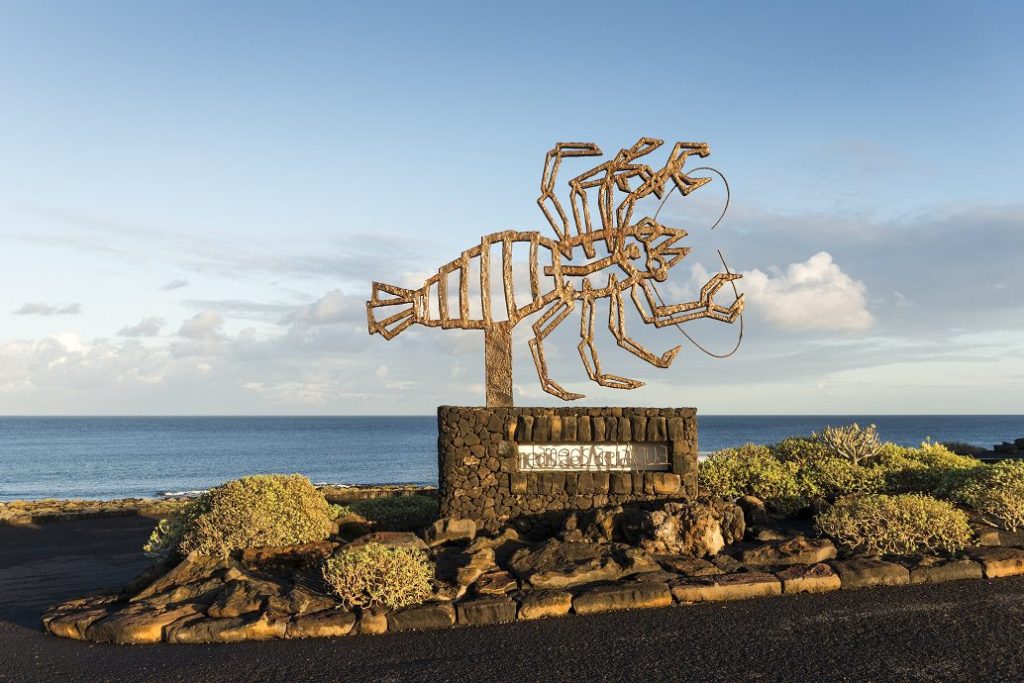
Keep your eyes open as you drive around the island and you will spot his enormous kinetic sculptures, known as Juguetes del Viento – “Wind Toys.”
These geometric structures were designed to move with the wind. Circles, spheres and other shapes rotate and balance in the island's strong trade winds, turning the sculptures into constantly changing pieces of kinetic art.
They are particularly fitting for Lanzarote because they bring together two of the island's defining characteristics:
volcanic landscapes and wind.
Some notable examples can be found around the island, including Fobos near the Fundación César Manrique in Tahíche, El Róbalo along Avenida de las Playas in Puerto del Carmen and Veleta in Arrieta.
So why not turn it into a little holiday challenge?
How many Wind Toys can you spot during your stay?
They are easy to miss if you're concentrating on the road, so keep your eyes open as you travel between towns and attractions.

More than an artist
It would be easy to describe César Manrique simply as an artist or architect.
But that doesn't really explain his importance to Lanzarote.
His work was also deeply connected to environmental protection and the future of the island.
He was critical of uncontrolled development and campaigned strongly against the kind of mass tourism that could have changed Lanzarote beyond recognition.
His vision helped establish an alternative model: one where tourism could exist while the island's landscape, traditional architecture and sense of place remained central.
The result is an island that still feels remarkably different from many other holiday destinations.
Discover Lanzarote through Manrique's eyes
Perhaps the most interesting thing about César Manrique is that you don't have to visit one of his attractions to experience his influence.
Look around.
Notice the traditional white houses.
Look at the way buildings sit against the volcanic landscape.
Notice the absence of high-rise towers in many parts of the island.
And notice what isn't there.
As you travel around Lanzarote, you won't find the landscape dominated by huge advertising hoardings, rows of commercial billboards or brightly coloured posters competing for your attention. Electricity infrastructure is also much less visually intrusive than in many other destinations, allowing the volcanic landscape, mountains and ocean to remain the focus.
This wasn't simply an aesthetic preference. It formed part of the wider vision for Lanzarote that Manrique championed: protecting the island from visual pollution and unnecessary development so that its natural beauty could remain the dominant feature.
It is one of those things you might not notice immediately when you arrive – but once you do, it becomes very noticeable when compared with other holiday destinations.
Look for the volcanic stone walls, the curves, the bright colours and, of course, the Wind Toys turning in the breeze.
Even the way you experience the island – moving between volcanic landscapes, traditional villages, beaches and viewpoints – feels connected to the vision he championed.
Manrique didn't simply leave Lanzarote a collection of impressive buildings.
He helped create a way of seeing the island.
And once you understand that, you begin to see his influence everywhere.
Staying with Lanzarote Retreats
One of the things we love about Lanzarote is that you don't have to travel far to experience the island's unique character.
From our properties across Lanzarote, you're surrounded by the landscapes, villages and volcanic scenery that inspired Manrique throughout his life.
Whether you spend a day exploring Jameos del Agua and Cueva de los Verdes, discovering the views from Mirador del Río, visiting his former homes in Tahíche and Haría, or simply spotting one of his Wind Toys as you drive around the island, exploring César Manrique's Lanzarote gives you a much deeper appreciation of what makes the island so special.
It isn't just somewhere to visit. It's an island with an identity – and César Manrique helped make sure it kept it.
Recent Posts