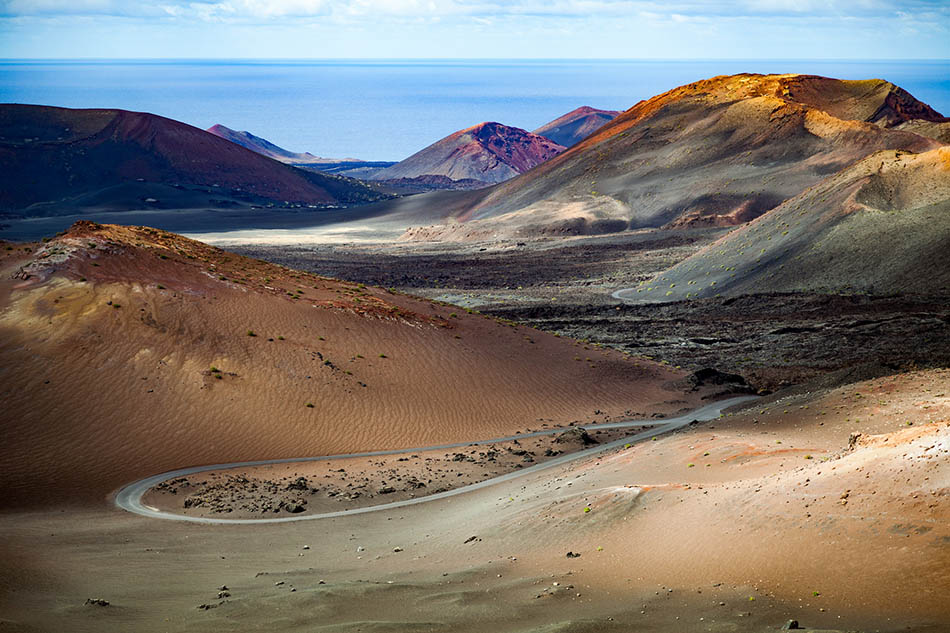
The volcanic eruptions of the 18th and 19th centuries dramatically transformed the landscape, creating Lanzarote’s iconic lava fields and unique terrain. Today, Lanzarote is a UNESCO Biosphere Reserve, known for its striking natural beauty, charming villages, and the visionary works of local artist César Manrique, which blend art with nature to preserve its heritage.
Tourists seeking sunshine and beaches first began to visit the Canaries in large numbers in the 1960s. Away from the main tourist resorts, the island resists change and the laid-back atmosphere and spectacular scenery provide visitors a chance to feel the magic of Lanzarote.
Lanzarote History
Created 35 million years ago, the volcanic island of Lanzarote had early settlers dating back to 1100 BC.
“On the evening of 1st September 1730, at Timanfaya,…the earth suddenly broke open. On the first night, a gigantic mountain reared up out of the lap of the earth, and from its peak flames leapt up and burnt incessantly for nineteen days.”
In 1730, volcanic eruptions lasting a total of 2053 days devastated the southern part of the island, creating 32 new volcanoes, destroying 11 villages and covering a quarter of the islands surface in lava.
Lanzarote, the easternmost of the Canary Islands, boasts a rich history shaped by volcanic activity and ancient cultures. Settled by the Guanches, its original inhabitants, the island was later explored by Europeans in the 14th century.
Featured Properties

- 21
- 10
- 2
- 9
Expansive Luxury Villa with yurts, Ocean Views, 2 Pools, Hot Tub and lush gardens.
More Info
- 10
- 5
- 1
- 5
Spacious 5 Bedroom Boutique villa at beach location within a peaceful coastal village
More Info
- 6
- 3
- 2
- 3
Spacious 3 Bedroom Farmhouse with Private Pool, Bamboo Dining Hut & Panoramic Sea and Volcano Views – Perfect for Families
More Info

- 6
- 2
- 1
- 1
Beautiful 1 Bedroom Garden Cottage with separate second bedroom, Sea Views, Private Garden, Terrace
More Info